About the Founder

Forty years of systems. One more.

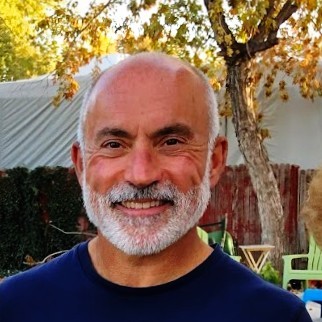
Carlo Colatosti, founder.
Long Island, New York.
Carlo Colatosti, founder of Carbon and Silicon AI Ventures

It started with a builder.

My father, Franco Colatosti, was a builder on Long Island. He came over from Italy and put up homes and commercial buildings across the North Shore for decades. Huntington Gables — his first major subdivision. Setauket Gables. The house I live in now on Mondavi Lane in Setauket, plus two more on the same cul-de-sac. The three-story commercial building at 407 East Main Street in Port Jefferson that's housed the U.S. Post Office for 60 years and still does.

He didn't build for the season. He built things that were still standing two and three generations later. That ethos got into me young, and it never left.

I grew up watching a man who solved problems with his hands, his head, and a kind of patience that doesn't really exist anymore. He'd walk a site, see what was there, see what needed to be there, and then methodically close the gap. Forty years later, I'm still doing the same job — just with different materials.

Architecting systems for institutions that couldn't afford to fail.

I spent four decades in IT systems architecture, mostly working with financial institutions where the cost of a bad system was measured in millions of dollars and broken trust. Brokerage operations. Trading floors. Back-office reconciliation. Compliance frameworks. Disaster recovery planning. The unsexy plumbing that keeps the modern economy from coming apart.

What I learned over those years isn't a list of technologies — most of them are obsolete now anyway. What I learned is something deeper, and it turns out to be exactly the thing the AI revolution requires:

"Technology adoption isn't a technology problem. It's a people problem wearing a technology costume."

Every system I ever installed lived or died based on whether the humans using it actually adopted it. The smartest architecture in the world fails if the people who need to use it don't trust it, don't understand it, or don't have a path from where they are to where the system needs them to be.

That single insight — applied across forty years and dozens of organizations — is the entire foundation of what I'm building now.

I retired. Then I unretired.

I retired a few years back with the standard plan: enjoy the life Susan and I had worked for. Tennis. The Peloton. Long bike rides together. Kayaking in Port Jefferson Harbor. Camping on Long Island. Hiking the trails on the North Shore. We attend performances at the Staller Center at Stony Brook University and are involved in the university's International Friends and Family Program. Our son John lives at home and joins us for a lot of it. We visit our daughter Marissa and son-in-law Joe in Myrtle Beach, and our son Ryan and his wife Leah and our granddaughters Lark and Willa out in Colorado. Sometimes we head out to Utah to visit family at their vacation place. My 90-year-old mother Maria still lives in the house I grew up in, right nearby — she comes over weekly for dinners and spends days with us. Protect the calm. Live the life we'd built.

And I was doing all that. But something kept tugging at me.

I was watching the AI moment unfold — not the hype version on cable news, the actual version playing out in real workflows — and I realized something the IT veteran in me couldn't ignore: the gap between what AI can do and what working professionals are actually doing with it is enormous, and it's getting worse, not better.

The tools are extraordinary. The educational material is mostly garbage. The consulting industry is charging six figures to tell people things they could implement themselves with the right framework. And the people who could most benefit — independent professionals running real businesses — are getting almost no usable guidance.

So I unretired. Not for the money. For the puzzle.

Experience meets intelligence.

The tagline isn't marketing fluff. It's the actual structural thesis of the company.

AI is intelligence at scale — extraordinary cognitive capability available to anyone who can write a sentence. But intelligence without experience is just energy without direction. It's a Ferrari with no driver. The AI itself doesn't know which problems are worth solving, which workflows actually exist in your industry, what the real friction points are, where the regulatory landmines live, or how to package a solution so a working professional will actually use it on a Tuesday afternoon.

That's what experience brings. That's the carbon side. Forty years of pattern recognition about what works in the field, what fails in the field, and why.

Carbon and silicon. Experience and intelligence. The convergence is the product.

Industry-specific kits. Done right, done deep.

Generic AI advice is useless because every industry has its own workflows, vocabulary, regulatory environment, and culture. A real estate agent's day looks nothing like a doctor's day, which looks nothing like a financial advisor's day, which looks nothing like a small-firm lawyer's day.

So I'm building industry-specific implementation kits — complete, six-component systems engineered for one type of professional at a time. Not "here are some prompts." Not "here's a webinar." Actual kits with field-tested prompts, readiness assessments, 90-day roadmaps, workflow templates, tool comparison guides, and quick-start checklists. Everything a working professional needs to integrate AI into their actual operations, with no implementation consultant required.

Here's the roadmap:

Live AI Playbook for Real Estate Professionals
In Development AI Playbook for Healthcare Practitioners
Planned AI Playbook for Financial Advisors
Planned AI Playbook for Small Law Firms

Protect the calm.

I built this venture around three rules that come straight from the lessons of forty years in operations:

No travel. Everything I sell is digital. Customers download what they need and implement on their own timeline. I'm not flying to anyone's office to do a workshop, and that's by design — it's what keeps the business sustainable for a one-person operation and what keeps me available for the life I retired to live.

No meetings. The kits answer the questions before they're asked. If you need to schedule a call to understand the product, I've designed the product wrong.

No fluff. Every component is built to be used, not consumed. No filler chapters. No padded word counts. No theory without immediate application. If a section doesn't earn its place, it gets cut.

This isn't asceticism. It's discipline. The same discipline that lets a system architect ship reliable systems on deadline year after year is the discipline that lets a one-person digital business serve thousands of customers without burning down the founder's life.

If any of this resonates,
start with the kit.

The AI Playbook for Real Estate Professionals is live now. $97. Six components. Zero filler.

Get the Real Estate Playbook →